About Us
Benetas is a charitable organisation structured as a public company limited by guarantee and does not own or control any other entity.
Benetas is a leading not-for-profit organisation engaging approximately 1800 employees, with a mission to provide older Victorians, their families and carers with a full range of quality community-based services, residential aged care homes, retirement living, primary and home care plus respite services, across metropolitan and regional Victoria. Benetas’ main operations include its aged care and community health care services, including the people it directly employs.
Benetas’ supply chain includes suppliers and contractors covering hospitality services (i.e. food services, catering, cleaning, laundry); allied health; agency labour; pharmacy & medical supplies; property services (i.e. maintenance, utilities, waste management, security, etc.); information, communication & technology; gardening; equipment purchases; capital & property development works, and investment advisers.
Modern Slavery Position
Benetas rejects any form of modern slavery and human trafficking, and we are committed to implementing effective systems and controls to ensure it does not take place directly within our own business or our supply chains. We respect the human rights of our employees, volunteers, customers, suppliers and business partners, and we aim to identify and manage any risks related to these rights.
Our Workplace Risk Assessment
Benetas engages employees that align with our values and we comply with all relevant local and national laws related to human rights and modern slavery in our workplace. As an organisation a strong focus is placed on managing the health, safety and wellbeing of our employees and volunteers. We are committed to maintaining a diverse and inclusive workplace, treating people with respect, dignity and have no tolerance for discrimination or harassment.
As an aged care service provider in a highly regulated industry, Benetas considers the risk of modern slavery within its direct business operations to be relatively low. However, Benetas recognises that through its supply chain, Benetas may be indirectly exposed to the risk of modern slavery and human trafficking.
Our Investment Funds Management Policy
Benetas’ investment strategy covers environmental, social and ethical considerations when selecting suitable investment opportunities and explicitly states that companies who knowingly engage in, or are suspected of engaging in modern slavery through supply chain activities will not be considered.
Our Actions Taken
Benetas undertakes new updated awareness training courses in 2025 for employees to mitigate any potential human rights violations in our business operations and supply chains through:
- Governance - Benetas raises the awareness of modern slavery risks via various internal communications, informing the board and management of our obligations and accountabilities for identifying and managing these risks. Compliance reporting now forms a heavier focus of our improvement of policies and procedures.
- Policy - Benetas is developing a new procurement framework for 2026. Modern slavery requirements are being updated and further expanded upon. Increased controls have also been introduced to further police our Modern Slavery procedures.
- Reviews - Our policy, procedures and templates will be reviewed annually to ensure the effectiveness of Modern Slavery education in relation to compliance requirements. Surveys and compliance reports will assist in determining the effectiveness. Area’s of focus will be: contract register documentation, Request of Quote and Tender documents.
- Awareness Training - We currently run outsourced training modules in 2025. Educate on the risks of Modern Slavery in 2025 and beyond. This has been introduced for all involved in the approval of procurement goods and services within Benetas. Completion rates are monitored as part of our key performance indicators. In addition, compliance reports are utilised to determine priority areas within the business which may require refresher training.
- Supplier Obligations - Benetas has a Supplier Code of Conduct which outlines Benetas’ commitment to ethical, socially responsible and sustainable practices and makes it clear that we are committed to developing relationships with business partners, suppliers and contractors that align with our values and commitment to managing modern slavery risks. The Supplier Code of Conduct is issued to all new suppliers upon application to become a Benetas supplier.
- Supplier Selection - Tender documents request tenderers provide information on their approach to managing modern slavery in their supply chain. Supplier responses cannot proceed if determined they fail basic requirements under modern slavery such as having an up-to-date modern slavery statement. Updated procurement templates which include modern slavery as a standard pre-qualification requirement raises expectations of our commitment to managing modern slavery risks within our supply chains. Where a risk assessment deems a supplier to be high risk, a modern slavery survey has been developed for inclusion in regular contract management discussions.
- Supplier Compliance - Benetas uses an online contractor compliance and induction application adopting a risk-based approach. Using this risk based framework Benetas will target high risk categories and suppliers utilising a contract management approach.
- Grievance and Feedback Mechanisms - Benetas has a Whistleblower Policy and complaints mechanism process that allows all Benetas directors, executives, managers, employees, volunteers, suppliers, contractors and consultants, with the ability to raise concerns such as modern slavery risks in a confidential manner.
What we are planning
Benetas will strengthen our understanding of human rights issues as they apply to our business operations and in particular our supply chains.
Our key areas of focus will be to:
- Continue to update relevant Benetas policies and procedures to specifically reference modern slavery risks and key accountabilities.
- Procurement Risk Assessment – Benetas has configured a risk-based assessment procedure into our compliance and induction application for procurement. Benetas plans to conduct annual reviews on the effectiveness of this framework and modify accordingly. This framework effectively identifies supplier segments that may carry a higher risk of human rights violations within their supply chain. Within the application, suppliers are required to respond to risk-based inquiries and acknowledge their agreement to the Supplier Code of Conduct.
- Work directly with suppliers identified as high risk categories for modern slavery, including linen and uniform suppliers, medical consumables, and catering services. The focus will be to investigate in more depth how high risk suppliers understand where their greatest exposure to modern slavery is within their own supply chains and what they plan to do towards identifying or reducing this exposure.
- Migrate old and new agreements over to Benetas standard template supplier agreements (where applicable) to raise expectations of our commitment to managing modern slavery risks.
- Maintain a risk register of high-risk procurement categories which would act as a trigger for further investigation upon supplier engagement.
Statement
This statement was approved by the Board of the Anglican Aged Care Services Group trading as Benetas (ABN 60 082 451 992) pursuant to section 13 of the Modern Slavery Act 2018 and constitutes our modern slavery and human trafficking statement for the financial year ended 30 June 2025
This statement is signed by Julia Pryor in her role as Chair of Anglican Aged Care Services Group.
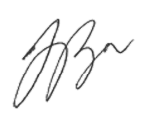
Julia Pryor
Chair September 2025